

NOTTINGHAMSHIRE — Broxtowe Borough Council has hit back at a mounting online backlash, claiming there has been "some misunderstanding" over its decision to bypass a full Environmental Impact Assessment (EIA) for a massive housing development on a historic local golf course.
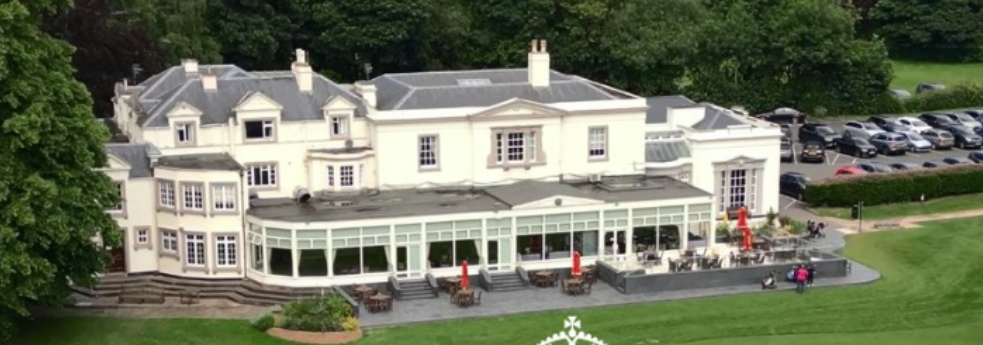
The controversy centers on Beeston Fields Golf Club, a beloved community fixture founded in 1923. The site, along with its attached wedding venue, was sold in November 2024 to the Warwickshire-based property developer Cilldara Group. While members were initially reassured the course would continue to operate normally, Cilldara has since unveiled preliminary plans to build up to 500 homes, a 60-bed care home, a mobility hub, a café, and a park on the land.
Fury erupted online after the council ruled on July 6 that a full EIA—a formal legal process used to protect the environment by measuring a project's impact before planning permission is granted—would not be required. Under UK law, EIAs are only triggered for projects deemed to have a "significant" effect on the surrounding area.
Local residents quickly raised alarms over the welfare of wildlife and biodiversity, with many expressing confusion over how the local ecosystem would be protected and whether the public would be completely shut out of the process.
The row reached political levels when Broxtowe’s Labour MP, Juliet Campbell, intervened. Posting to Facebook on July 7, Campbell stated she "shared" the deep concerns of her constituents and confirmed she had written directly to the council’s chief executive to demand answers.
In a bid to quash the growing anxiety, Broxtowe Borough Council issued a lengthy statement on Thursday (July 9), defending its decision-making process.
“Developments of this size naturally attract more views from residents and interested parties,” the council's statement read. “Unfortunately, in this case, there has been some misunderstanding. The listing on our website refers to the Environmental Impact Assessment (EIA) and the associated screening processes, which we are legally required to undertake. During this process, the council consults with various national bodies to determine whether an EIA is necessary before making a decision.”
The local authority clarified that while it is legally obligated to publicize the screening process on its website, there is "no requirement" for a public consultation regarding the EIA decision itself.
Explaining the ruling, the council stated:
“We have determined that a full EIA is not required. This is primarily because the development is too small, and some elements that would be required as part of that assessment would be irrelevant, as they are more suited to larger development schemes.”
However, the council stressed that the lack of an EIA does not give the developer a free pass on the environment. National planning criteria will still force Cilldara to submit "comprehensive" individual surveys covering ecology, trees, and open spaces alongside any future application.
The council also offered a rare apology for its digital communication, adding: “We accept that the wording on our website may have been confusing and are working to improve our processes for future screening stages.”
Local politicians are now urging calm, reminding the public that Cilldara has only launched a preliminary consultation and has not yet formally submitted outline planning documents.
Councillor Teresa Cullen (Brox Alliance) emphasized that the ultimate fate of the green space is far from decided.
“We recognise the general concern that’s been caused by the consultation on the development at Beeston Fields Golf Club, but it’s the owners of the golf club who want to develop it,” Cllr Cullen said. “When they bring forward a formal planning application, that’s the point at which the council will decide whether we think it’s an appropriate development. At this point, we don’t know. Any large-scale planning application has to undergo all sorts of assessments to determine the effects on biodiversity, roads, and school places.”